Single-ingredient vs multi-pathway approach
The majority of joint supplements on the market are single-mechanism products — they address either cartilage structure (typically Glucosamine-only or Glucosamine + Chondroitin), or inflammation (typically Turmeric-only or Boswellia-only), but not both simultaneously. This reflects the historical development of the supplement category, where individual compounds entered the market independently before the research established their complementary roles.
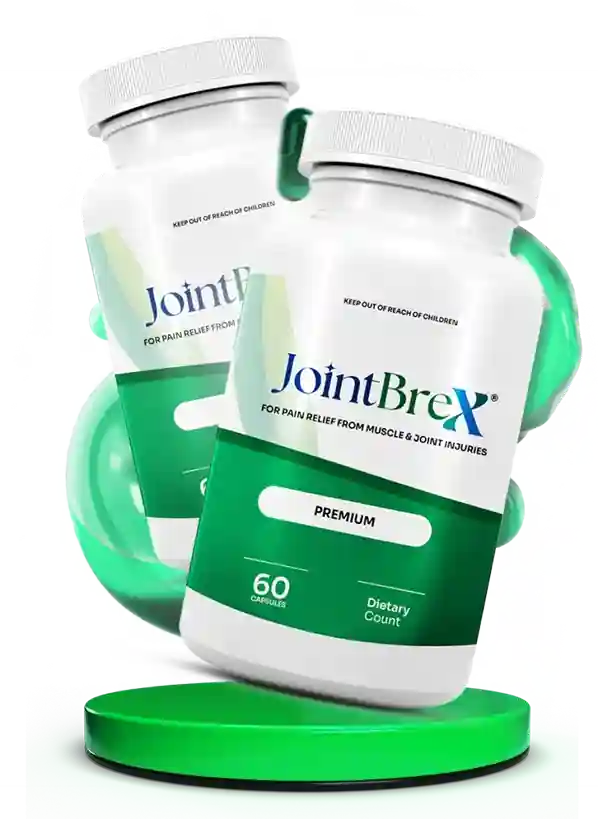
Joint Brex is structured around three simultaneous pathways: structural (Glucosamine + Chondroitin), inflammatory (Boswellia + Turmeric), and connective tissue (MSM + Bromelain). The clinical rationale for this approach is that joint discomfort typically involves more than one of these pathways simultaneously — cartilage wear creates inflammation, inflammation accelerates cartilage wear, and the connective tissue environment surrounding the joint is affected by both. A formula covering all three pathways addresses this more completely than a single-mechanism product. See the full three-pathway explanation.
Ingredient transparency: proprietary blends vs disclosed amounts
One of the most meaningful differentiators in the supplement industry is whether a product discloses individual ingredient amounts or uses a proprietary blend. A proprietary blend lists a total weight for a group of ingredients without revealing how much of each is present. This makes it impossible to evaluate whether the dose of any individual ingredient meets the threshold used in clinical research.
Joint Brex discloses each of the six ingredient amounts individually. This matters because dose thresholds in joint supplement research are meaningful — a 250 mg Glucosamine dose is not the same as a 1,000 mg dose in clinical terms, and a proprietary blend that includes Glucosamine could contain either without disclosure. Transparent dosing is not universal in the supplement market, and it is a genuine quality signal when present. Read the ingredients evidence guide for the clinical dose context.
See the full Joint Brex formula with all six disclosed ingredient amounts.
🧖 View Joint Brex FormulaMechanism coverage: what most formulas miss
When comparing joint supplements, the most informative question is which physiological pathways the formula actually covers. Glucosamine-only products address structural cartilage support but leave the inflammatory cycle unaddressed. Turmeric-only products address NF-kB inflammation but do not provide structural cartilage support or connective tissue nutrients. Even Glucosamine + Chondroitin combinations — the most common two-ingredient joint formula — address structure but leave both inflammatory pathways and the connective tissue dimension uncovered.
Joint Brex covers all three dimensions with two ingredients per pathway. Whether this full-coverage approach produces meaningfully better outcomes than a single-mechanism product for any individual depends on which pathways are most relevant to their joint condition — but structurally, it addresses more of the known physiology in a single daily formula than most alternatives.
Manufacturing quality markers
Beyond the formula itself, manufacturing quality is a meaningful differentiator. Joint Brex is produced in a USA facility that holds both FDA registration and GMP (Good Manufacturing Practice) certification. GMP certification involves third-party auditing of manufacturing processes, ingredient identity verification, batch testing and quality control documentation. This is a higher standard than unverified overseas manufacturing, where the labelled dose and actual dose may diverge without traceability.
Not all supplements on the market are produced to this standard. When evaluating any joint supplement, checking for verifiable manufacturing quality (FDA-registered facility, GMP certification, country of manufacture) is as important as evaluating the ingredient list itself.
Honest trade-offs to consider
A multi-ingredient formula like Joint Brex has more potential interaction points than a single-ingredient product. More specifically: the shellfish allergen from Glucosamine affects anyone with crustacean shellfish allergy, and the Bromelain and Turmeric blood-thinner interactions apply to anyone on anticoagulant medication. A Boswellia-only or Turmeric-only product would not carry the shellfish allergen. If these specific contraindications apply to you, a simpler single-mechanism product may be more appropriate. See the complete side effects guide before deciding.
Keep reading
More articles on the Joint Brex blog. Visit the Joint Brex official site for current pricing.
Joint Brex adds anti-inflammatory coverage (Boswellia + Turmeric) and connective tissue support (MSM + Bromelain) to the structural Glucosamine + Chondroitin base — addressing three pathways where most products address only one.
No. All six ingredient amounts are individually disclosed — unlike many supplements that hide doses inside a proprietary blend total weight.
Not always. More ingredients mean more potential interaction points — including the shellfish allergen and blood-thinner interactions in Joint Brex. If those contraindications apply to you, a simpler formula may be more appropriate.